January 24, 2025

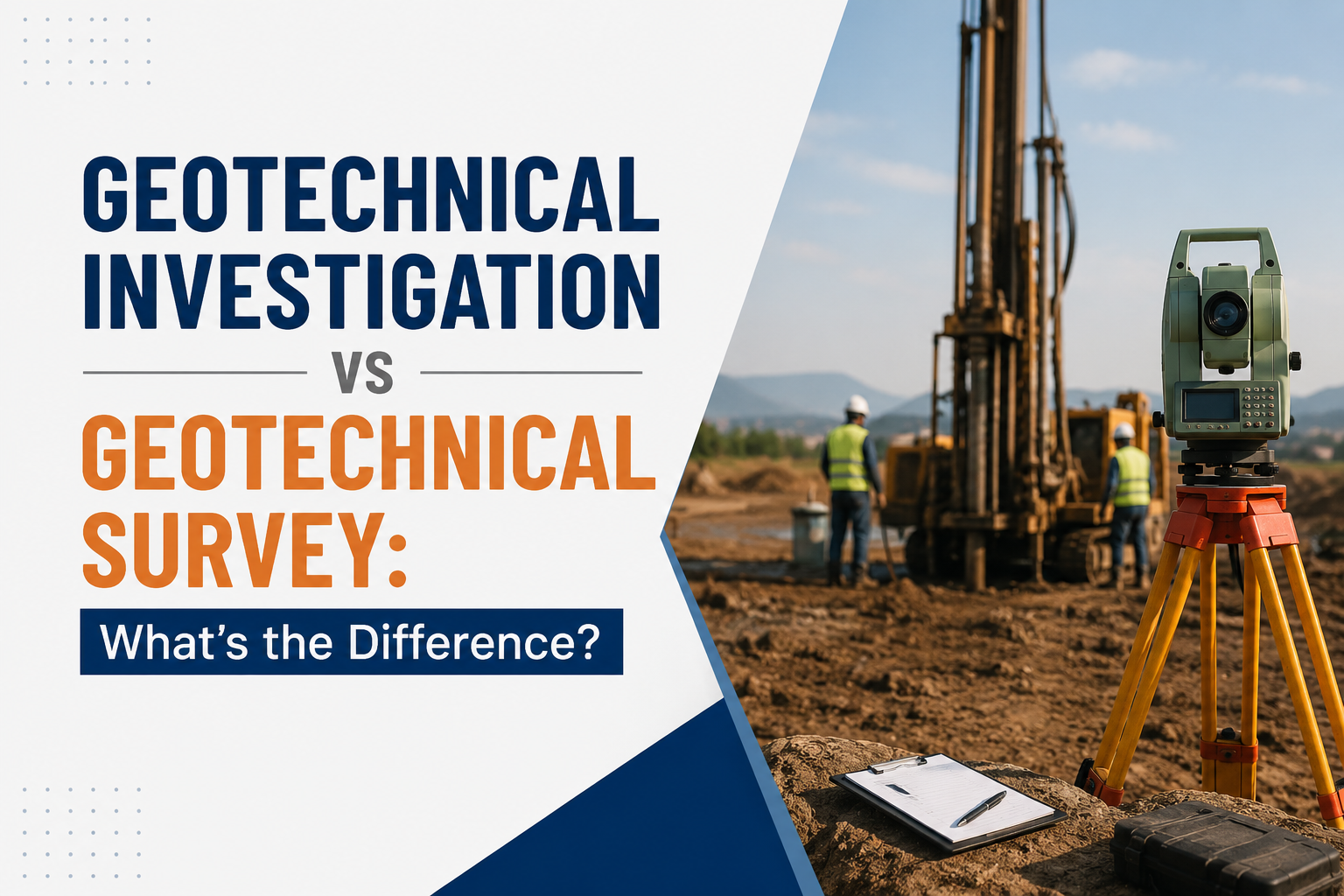
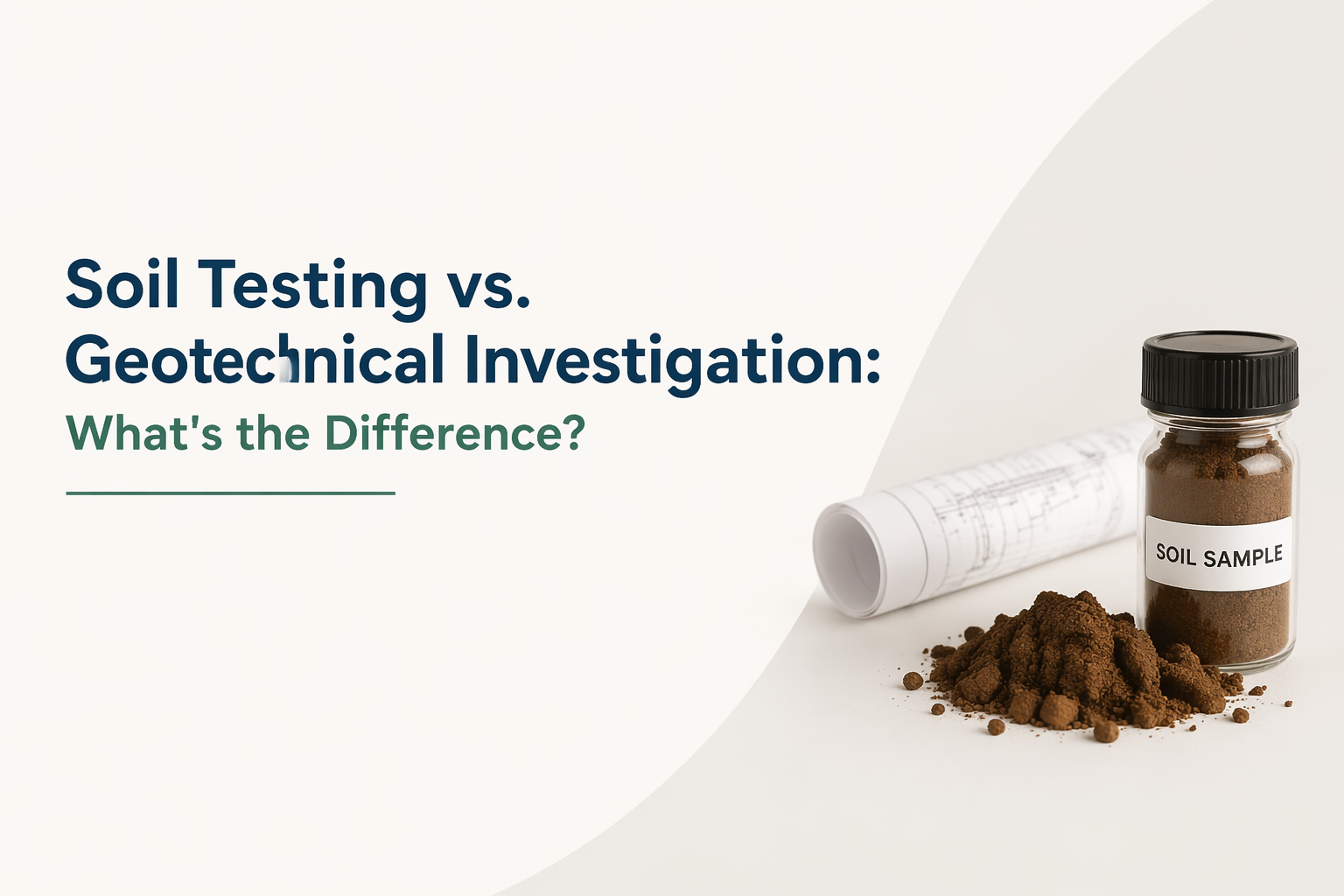
Geotechnical Investigation vs Geotechnical Survey: What's the Difference?
If you are planning a construction project — whether it is a residential building, a commercial complex, a bridge, or a road — you have likely come across two terms: geotechnical investigation and geotechnical survey. Many people use these terms interchangeably, but they are not the same thing. Understanding the difference between the two can save you time, money, and prevent serious structural problems down the line.
In this blog, we will break down what each term means, how they differ, what methods are used, when you need each one, and what they cost — so you can make the right decision for your project.
What is Geotechnical Investigation?
Geotechnical investigation is a detailed, in-depth study of the subsurface conditions of a specific site. It involves physical testing, sampling, and laboratory analysis of soil and rock to determine the engineering properties of the ground beneath a proposed structure.
The primary goal of a geotechnical investigation is to provide engineers and architects with accurate data about:
-
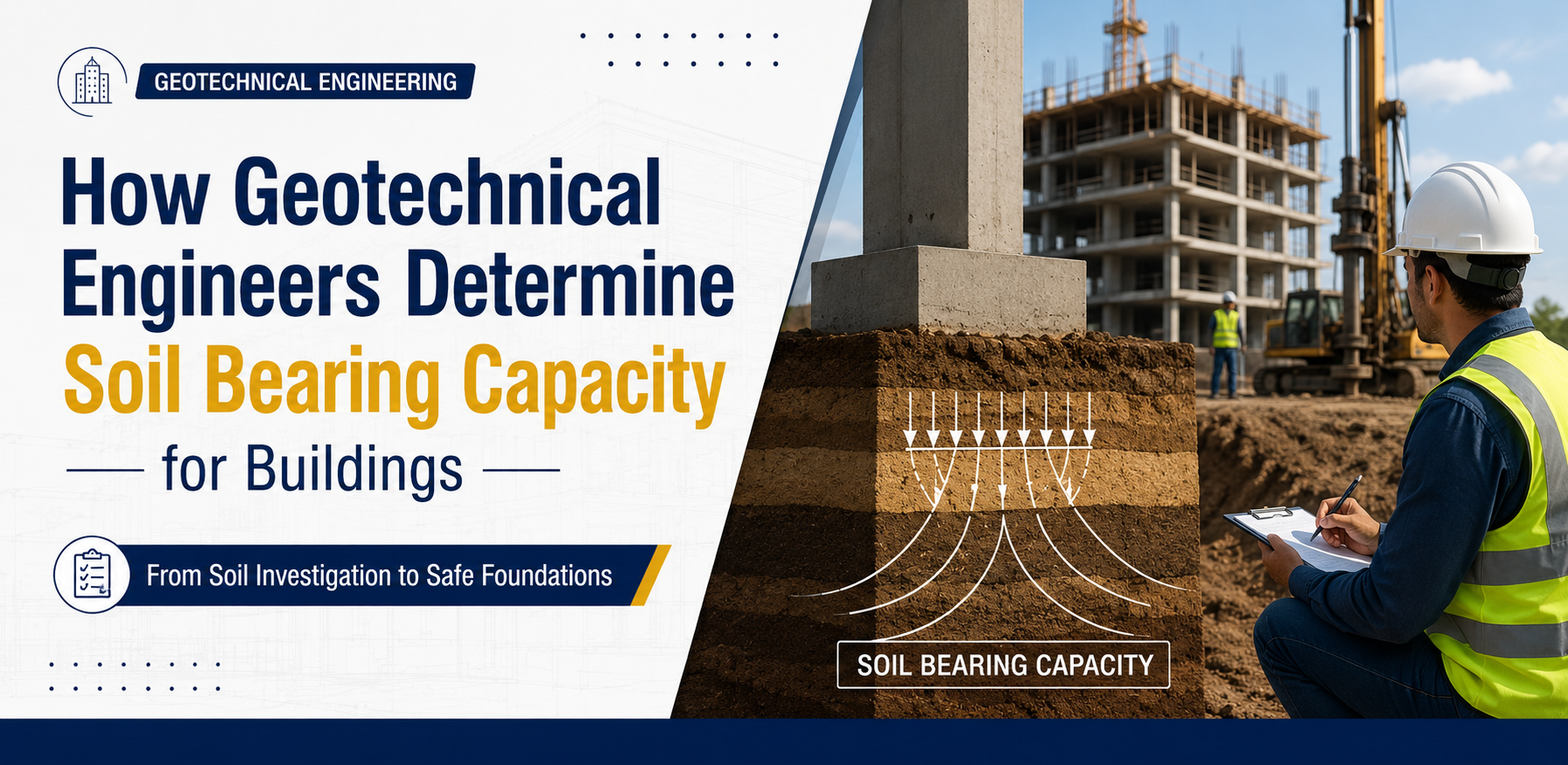
Soil strength and bearing capacity
-
Groundwater levels and drainage conditions
-
Rock quality and depth
-
Potential for settlement, liquefaction, or slope failure
-
Suitability of the ground for the proposed foundation
A geotechnical investigation report for construction is a legally required document in most countries before major construction begins. It guides foundation design and ensures the safety of the structure.
Common Geotechnical Investigation Methods Include:
-
Borehole Drilling – Drilling deep into the ground to extract soil and rock samples
-
Standard Penetration Test (SPT) – Measuring soil resistance to penetration
-
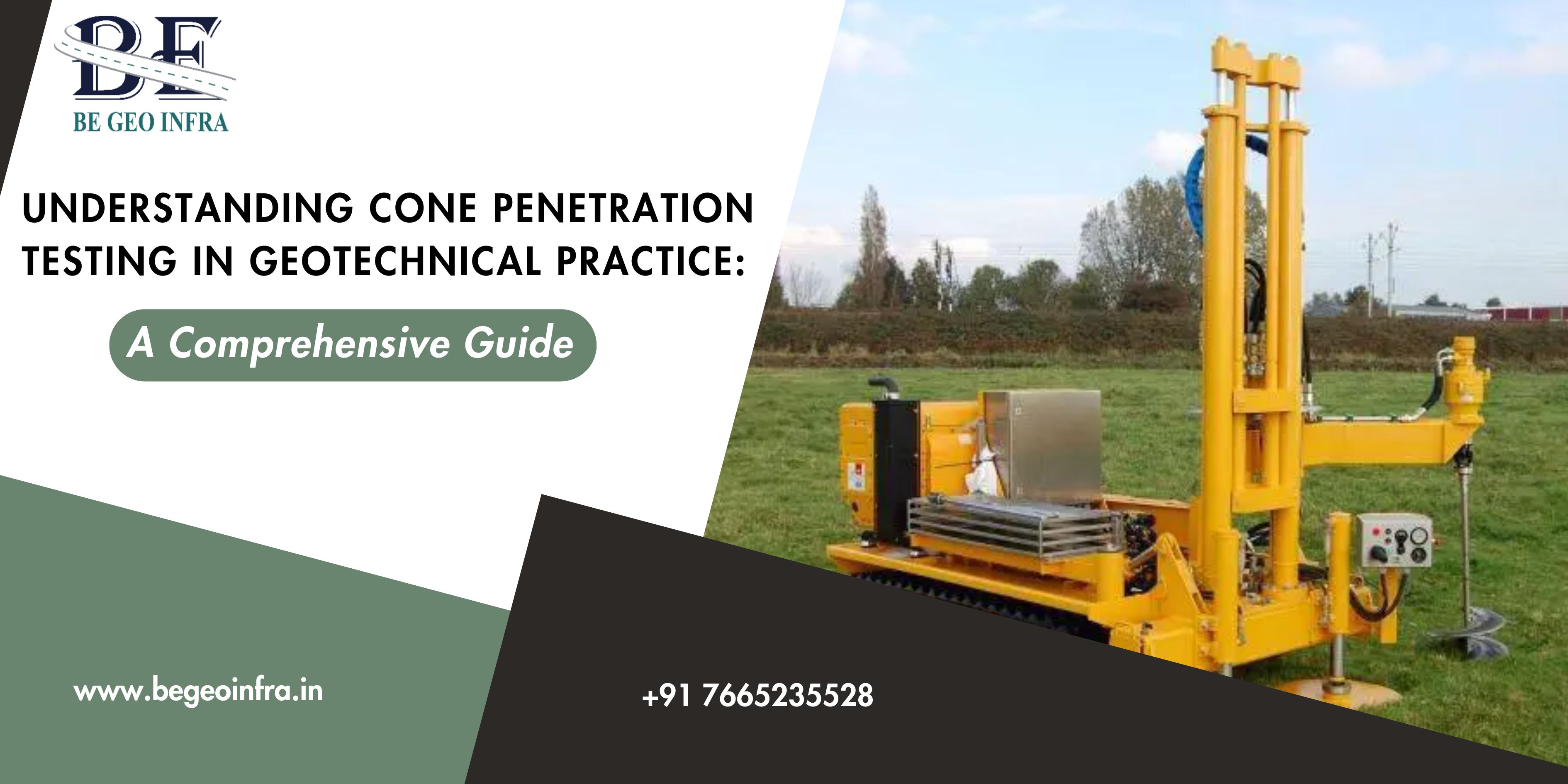
Cone Penetration Test (CPT) – Pushing a cone-shaped probe into the ground to measure resistance
-
Laboratory Testing – Testing extracted samples for moisture content, shear strength, compressibility, and more
-
Plate Load Test – Determining the bearing capacity of soil directly on-site
The geotechnical investigation process step by step typically follows this sequence: desktop study → field investigation → laboratory testing → data analysis → final report.
What is Geotechnical Survey?
A geotechnical survey is a broader, more general assessment of the ground conditions across a wider area. It is typically conducted in the early stages of a project — during feasibility studies or site selection — before a specific construction plan has been finalized.
The main purpose of a geotechnical survey is to:
-
Identify potential geotechnical hazards (landslides, sinkholes, erosion)
-
Map soil and rock types across a large area
-
Assess the overall suitability of a site for development
-
Provide preliminary data for planning and budgeting
Geotechnical surveys use a combination of remote sensing, geophysical methods, and limited ground testing. They are less invasive and less detailed than a full investigation.
Types of Geotechnical Survey Include:
-
Topographic Survey – Mapping the surface features of the land
-
Geophysical Survey – Using seismic, electrical, or magnetic methods to study subsurface conditions without drilling
-
Aerial/Satellite Survey – Remote sensing to study large areas
-
Desk Study / Walkover Survey – Reviewing existing maps, records, and making a visual inspection of the site
Geotechnical Investigation vs Survey: Key Differences
Here is a clear comparison to help you understand the difference between soil survey and soil investigation:
|
Feature |
Geotechnical Investigation |
Geotechnical Survey |
|
Purpose |
Detailed subsurface analysis for design |
Preliminary site assessment |
|
Scope |
Specific site / footprint |
Wider area |
|
Depth |
Deep (boreholes, sampling) |
Shallow or non-invasive |
|
Methods |
Drilling, SPT, lab testing |
Geophysics, mapping, desk study |
|
Output |
Detailed engineering report |
General site overview |
|
Stage of Project |
Design and construction stage |
Feasibility / planning stage |
|
Cost |
Higher |
Lower |
|
Time Required |
Weeks to months |
Days to weeks |
Simply put: a geotechnical survey tells you if you can build on a site, while a geotechnical investigation tells you how to build on it.
Soil Investigation vs Soil Survey: A Practical Example
Imagine you want to build a 10-story commercial building. Here is how both services would come into play:
Step 1 – Geotechnical Survey: You hire a team to conduct a preliminary survey of three potential sites. The survey identifies that one site has unstable filled land and another sits near an old drainage canal. Based on the survey, you select the safest and most suitable site.
Step 2 – Geotechnical Investigation: Once the site is selected, a full investigation is carried out. Boreholes are drilled, SPT tests are performed, and soil samples are taken to the laboratory. The results show that the bearing layer is at 8 meters depth and a pile foundation is recommended.
This is exactly when to use geotechnical survey vs investigation — survey first for selection, investigation next for design.
Geotechnical Survey for Building Foundation
When it comes to foundations specifically, a geotechnical survey for building foundation is often the first step. It helps determine:
-
Whether the site needs a shallow or deep foundation
-
Presence of any underground obstacles or voids
-
Risk of soil settlement under load
However, for the actual foundation design, a full geotechnical site investigation is always required. Relying only on a survey for foundation engineering is risky and often violates building codes.
Geotechnical Investigation Cost vs Survey Cost
One of the most frequently asked questions is about geotechnical investigation cost vs survey cost. Here is a general breakdown:
Geotechnical Survey Cost:
-
Desk study and walkover: $500 – $2,000
-
Geophysical survey (small site): $2,000 – $10,000
-
Suitable for early-stage feasibility assessments
Geotechnical Investigation Cost:
-
Small residential project: $3,000 – $10,000
-
Medium commercial project: $10,000 – $50,000
-
Large infrastructure project: $50,000 – $200,000+
Note: Costs vary based on location, site access, number of boreholes, depth of investigation, and local market rates.
While investigations cost more, skipping them can lead to foundation failures, structural damage, and repair costs that are 10x to 100x higher than the investigation itself.
Which One Do You Need?
Here is a simple guide:
-
Choose a Geotechnical Survey if: You are in the early planning phase, comparing multiple sites, or need a quick overview of ground conditions.
-
Choose a Geotechnical Investigation if: You have finalized your site and need detailed data for foundation design, structural engineering, or regulatory approval.
-
Choose Both if: You are working on a large infrastructure project such as a highway, dam, or industrial facility where phased ground investigation is standard practice.
Frequently Asked Questions (FAQs)
Q1. Can a geotechnical survey replace a geotechnical investigation? No. A geotechnical survey provides a general overview and is not sufficient for detailed foundation or structural design. A full investigation is always required for construction.
Q2. How long does a geotechnical investigation take? Depending on the size of the site, a geotechnical investigation typically takes 2 to 8 weeks, including fieldwork, laboratory testing, and report preparation.
Q3. Is a geotechnical investigation mandatory for residential buildings? In most countries and jurisdictions, a geotechnical investigation is mandatory for multi-story residential buildings and is strongly recommended even for single-story homes in areas with challenging soil conditions.
Q4. What is included in a geotechnical investigation report? A standard report includes site description, borehole logs, laboratory test results, groundwater data, foundation recommendations, and risk assessment.
Q5. Who conducts geotechnical investigations? Licensed geotechnical engineers and specialized firms with certified drilling equipment and accredited laboratories conduct geotechnical investigations.
Conclusion
Understanding the difference between geotechnical investigation and geotechnical survey is essential for anyone involved in construction, real estate development, or civil engineering. While both serve important roles, they are used at different stages of a project and for different purposes.
A geotechnical survey is your starting point — broad, fast, and cost-effective. A geotechnical investigation is your foundation — detailed, reliable, and essential for safe construction.
Never cut corners on ground investigation. The soil beneath your project is its most critical component, and understanding it properly is the smartest investment you can make before breaking ground.
Popular post

February 08, 2025
Pile Load Testing: Importance, Methods, and Benefits

February 11, 2025
Piling Work Service: The Key to Strong and Stable Foundations

February 18, 2025
What Are Geotechnical Services? A Complete Guide


February 22, 2025
What is a Road Safety Audit & Why is it Important?





April 16, 2025
Types of Material Testing: A Complete Guide for Beginners


February 07, 2026
Top 10 Geotechnical Problems in Construction and Their Solutions
March 31, 2026
Top 5 Pile Load Testing Methods Used in Modern Construction

June 30, 2026
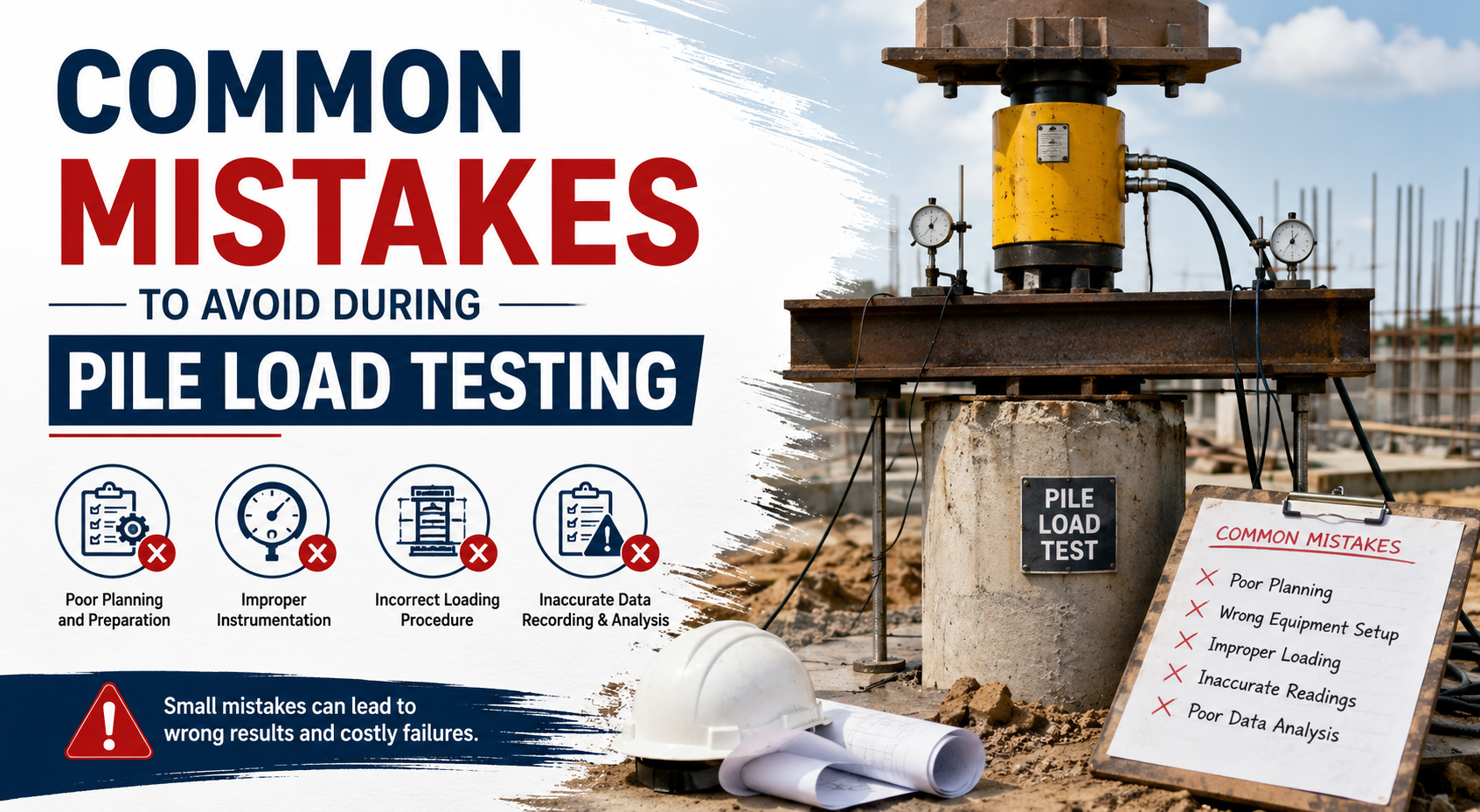
Common Mistakes to Avoid During Pile Load Testing

Need help? Call us Today at+91 7665235528
for inquiries and support. We’re here to assist you.