January 24, 2025

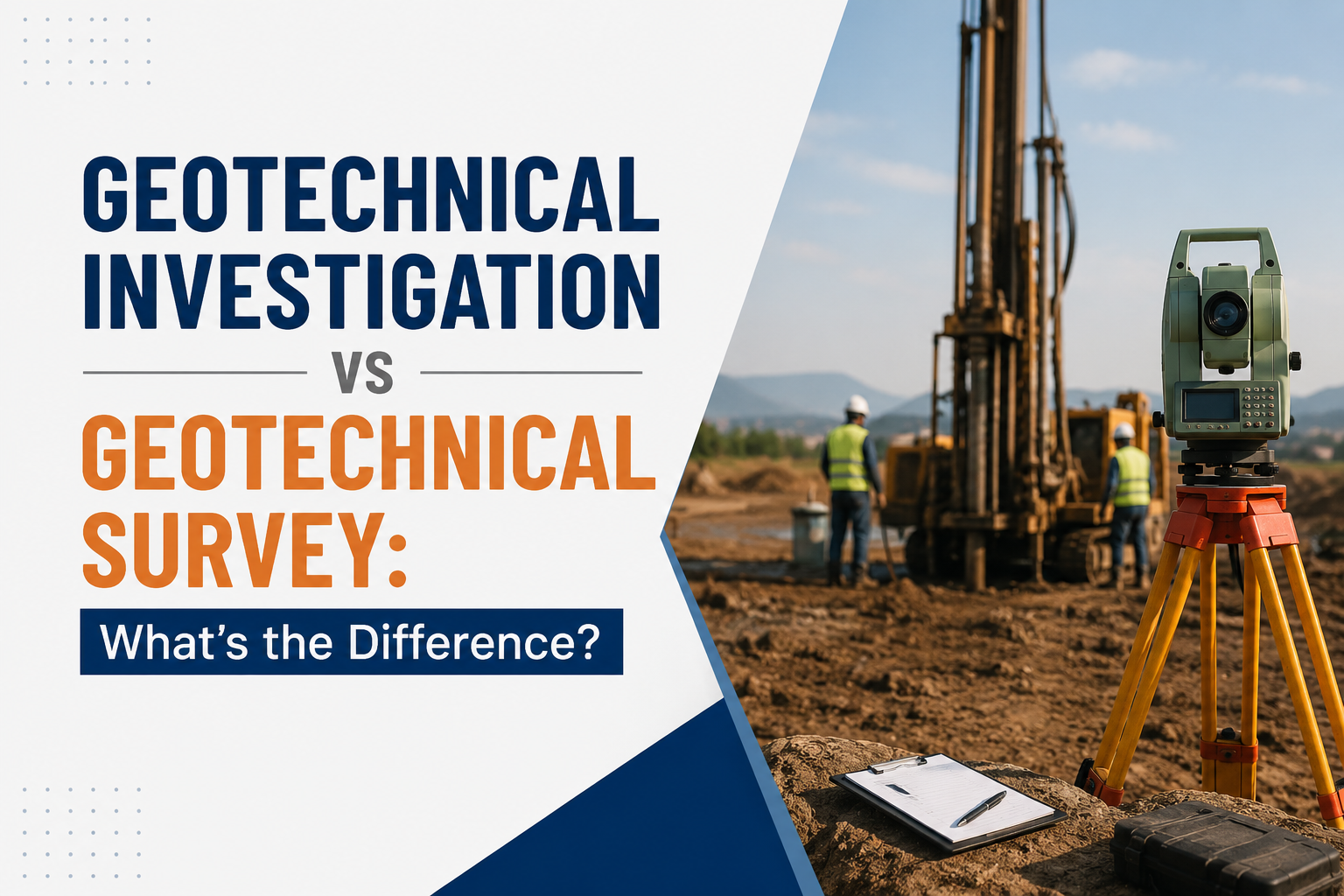
Soil Testing vs. Geotechnical Investigation: What's the Difference?
When it comes to building any structure — whether a home, a bridge, or a commercial complex — what lies beneath the surface matters just as much as what rises above it. Two terms that often create confusion among property owners, developers, and even some engineers are soil testing for construction and geotechnical investigation services. While they may seem similar, they serve very different purposes and scopes.
Understanding the difference between soil testing and geotechnical investigation is not just an academic exercise — it can be the deciding factor between a safe, long-lasting structure and a costly construction failure. In this blog, we break down both concepts clearly so you can make informed decisions for your next project.
What Is Soil Testing for Construction?
Soil testing is a focused laboratory or field-based process that evaluates the basic physical and chemical properties of soil at a specific location. It answers fundamental questions like: Can this soil support a load? How does water move through it? Is it chemically reactive?
Common Types of Soil Testing Methods
There are several types of soil testing methods used across construction projects:
-
Proctor Compaction Test – Determines the optimum moisture content at which soil achieves maximum density.
-
Atterberg Limits Test – Identifies the plasticity and liquid limits of fine-grained soils.
-
Sieve Analysis / Grain Size Distribution – Classifies soil based on particle size.
-
pH and Chemical Testing – Checks for corrosive substances that can affect foundations and buried structures.
-
Soil Bearing Capacity Test – One of the most critical tests, it measures how much load the soil can safely carry per unit area without failure or excessive settlement.
The soil bearing capacity test is especially vital for foundation design, as it directly informs engineers about the type and depth of foundation required for a given structure.
Who Needs Soil Testing?
Soil testing is typically required for small-to-medium residential and commercial projects where surface-level data is sufficient for design decisions. It forms part of the early feasibility stage of construction planning.
What Is Geotechnical Investigation?
Geotechnical site investigation is a far more comprehensive process. It goes beyond the surface and examines the subsurface conditions of a site in depth — literally and figuratively. A full geotechnical investigation includes field exploration, laboratory testing, data analysis, and professional interpretation, all compiled into a geotechnical investigation report.
This report becomes a critical reference document for structural engineers, architects, and project managers throughout the construction lifecycle.
What Does a Geotechnical Investigation Include?
A complete geotechnical investigation typically covers:
-
Site Reconnaissance – Visual inspection and historical review of the site.
-
Borehole Drilling (Geotechnical) – Borehole drilling geotechnical surveys involve drilling into the ground to collect soil and rock samples at various depths. This is one of the most reliable subsurface investigation methods available.
-
Standard Penetration Test (SPT) – Measures soil resistance at different depths.
-
Laboratory Testing – Includes consolidation, triaxial shear, and permeability tests.
-
Groundwater Analysis – Evaluates water table levels and seasonal fluctuation.
-
Risk Assessment – Identifies potential hazards such as liquefaction, landslides, and expansive soils.
The data collected through these subsurface investigation methods feeds into sophisticated engineering analyses that determine safe foundation design, slope stability, retaining wall requirements, and more.
Soil Test vs. Geotechnical Survey: Key Differences at a Glance
Understanding the soil test vs. geotechnical survey distinction helps project owners allocate the right budget and resources from the start.
|
Feature |
Soil Testing |
Geotechnical Investigation |
|
Scope |
Surface-level or limited depth |
Deep subsurface exploration |
|
Methods |
Basic lab & field tests |
Borehole drilling, SPT, CPT, lab analysis |
|
Output |
Test results/data |
Comprehensive engineering report |
|
Used For |
Small projects, preliminary checks |
Large-scale or complex projects |
|
Cost |
Lower |
Higher, but more detailed |
|
Team |
Lab technicians |
Geotechnical engineers |
Why Is Geotechnical Investigation Important Before Construction?
Why is geotechnical investigation important before construction? The answer is simple: because the ground does not always behave the way it looks.
Hidden conditions like soft clay layers, loose fill, underground water channels, or rock formations can drastically affect how a structure performs. Without proper investigation:
-
Foundations may settle unevenly, causing structural cracks.
-
Buildings in earthquake-prone zones may face liquefaction risk.
-
Retaining walls may fail due to unknown slope instability.
-
Unexpected soil conditions discovered mid-construction can cause massive cost overruns.
A full geotechnical site investigation eliminates these guesswork risks and ensures your project is built on verified data.
Soil Investigation for Foundation: Why It Cannot Be Skipped
Soil investigation for foundation design is arguably the most important application of both soil testing and geotechnical investigation. Every foundation — whether shallow (spread footing, raft) or deep (pile, caisson) — must be designed based on actual soil data.
Skipping or cutting corners on soil testing methods for residential construction is a common mistake among homeowners trying to save costs. However, remediation after construction — such as underpinning a sinking foundation — costs several times more than the original investigation would have.
For large infrastructure projects like highways, dams, and multi-storey buildings, a complete geotechnical investigation is not optional — it is a regulatory and engineering requirement.
How to Read a Geotechnical Investigation Report
Once the investigation is complete, the engineer prepares a detailed document. How to read a geotechnical investigation report is a common question among non-technical stakeholders. Here's what to look for:
-
Executive Summary – Outlines key findings and recommendations.
-
Site Description – Location, topography, and existing structures.
-
Borehole Logs – Graphical representation of soil layers at each drill point.
-
Lab Test Results – Data tables for each sample tested.
-
Foundation Recommendations – Suggested foundation type, depth, and bearing pressure.
-
Risk Flags – Any identified hazards like high water table, reactive soils, or weak strata.
If you are a project owner, you don't need to understand every technical detail — but you should ensure your structural engineer has reviewed and acknowledged the report before design begins.
Geotechnical Investigation Cost for Building Projects
One of the most frequently searched questions is about geotechnical investigation cost for building project. The cost varies based on:
-
Project size and complexity
-
Number of boreholes required
-
Depth of investigation
-
Laboratory testing scope
-
Location and site accessibility
For small residential projects, basic soil testing may cost a fraction of what a full geotechnical investigation does. However, for medium to large projects — commercial buildings, industrial facilities, infrastructure — the investment in comprehensive geotechnical investigation services is well justified by the risk it mitigates.
Always get a detailed scope of work from your investigation firm before comparing quotes. A cheaper report with fewer boreholes may leave critical areas unexamined.
Frequently Asked Questions (FAQs)
Q1: Can soil testing replace geotechnical investigation? No. Soil testing provides limited data, while geotechnical investigation offers a complete subsurface analysis. For any significant construction, a full investigation is recommended.
Q2: How long does a geotechnical investigation take? Depending on project size, it can take anywhere from a few days to several weeks, including lab testing and report preparation.
Q3: Is geotechnical investigation required by law? In most countries and for most commercial or infrastructure projects, yes — it is a mandatory requirement under building codes and safety regulations.
Q4: What is the difference between a soil test and a site investigation? A soil test focuses on specific physical properties of soil samples. A site investigation is a broader study that includes drilling, sampling, testing, analysis, and engineering interpretation of the entire subsurface condition.
Conclusion
Both soil testing and geotechnical investigation are essential tools in the construction industry — but they serve different purposes, scales, and levels of detail. While soil testing for construction gives you a quick snapshot of surface soil conditions, geotechnical investigation services provide the deep, reliable, and comprehensive data needed to design safe and durable structures.
Whether you are planning a small home or a large infrastructure project, investing in the right level of ground investigation is one of the smartest decisions you can make. Don't let what's underground become an unwelcome surprise above ground.
Looking for professional geotechnical investigation services? Contact our expert team today for a consultation and site-specific proposal.
Popular post

February 08, 2025
Pile Load Testing: Importance, Methods, and Benefits

February 11, 2025
Piling Work Service: The Key to Strong and Stable Foundations
February 18, 2025
What Are Geotechnical Services? A Complete Guide

February 22, 2025
What is a Road Safety Audit & Why is it Important?




April 16, 2025
Types of Material Testing: A Complete Guide for Beginners
February 07, 2026
Top 10 Geotechnical Problems in Construction and Their Solutions
March 31, 2026
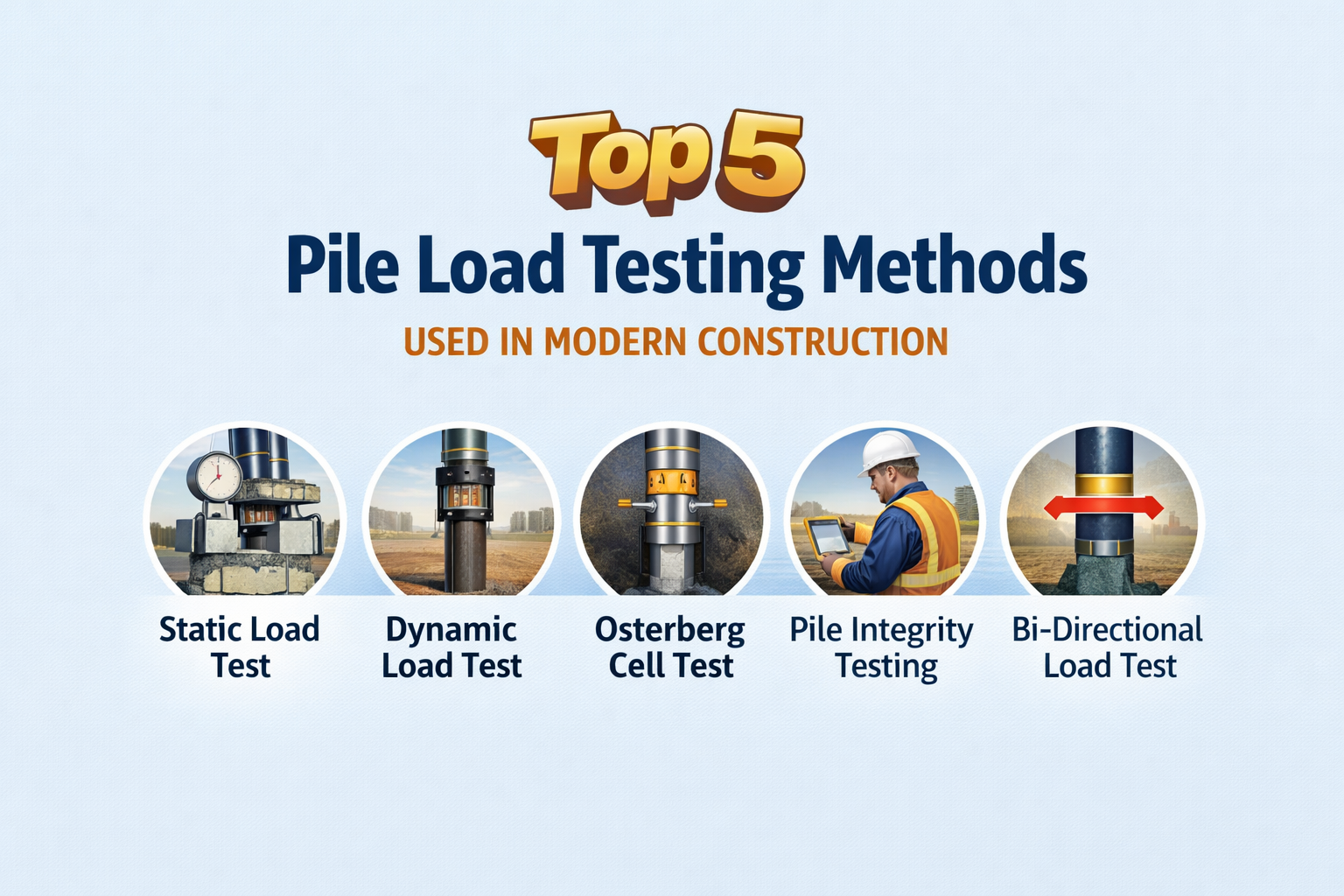
Top 5 Pile Load Testing Methods Used in Modern Construction

June 30, 2026
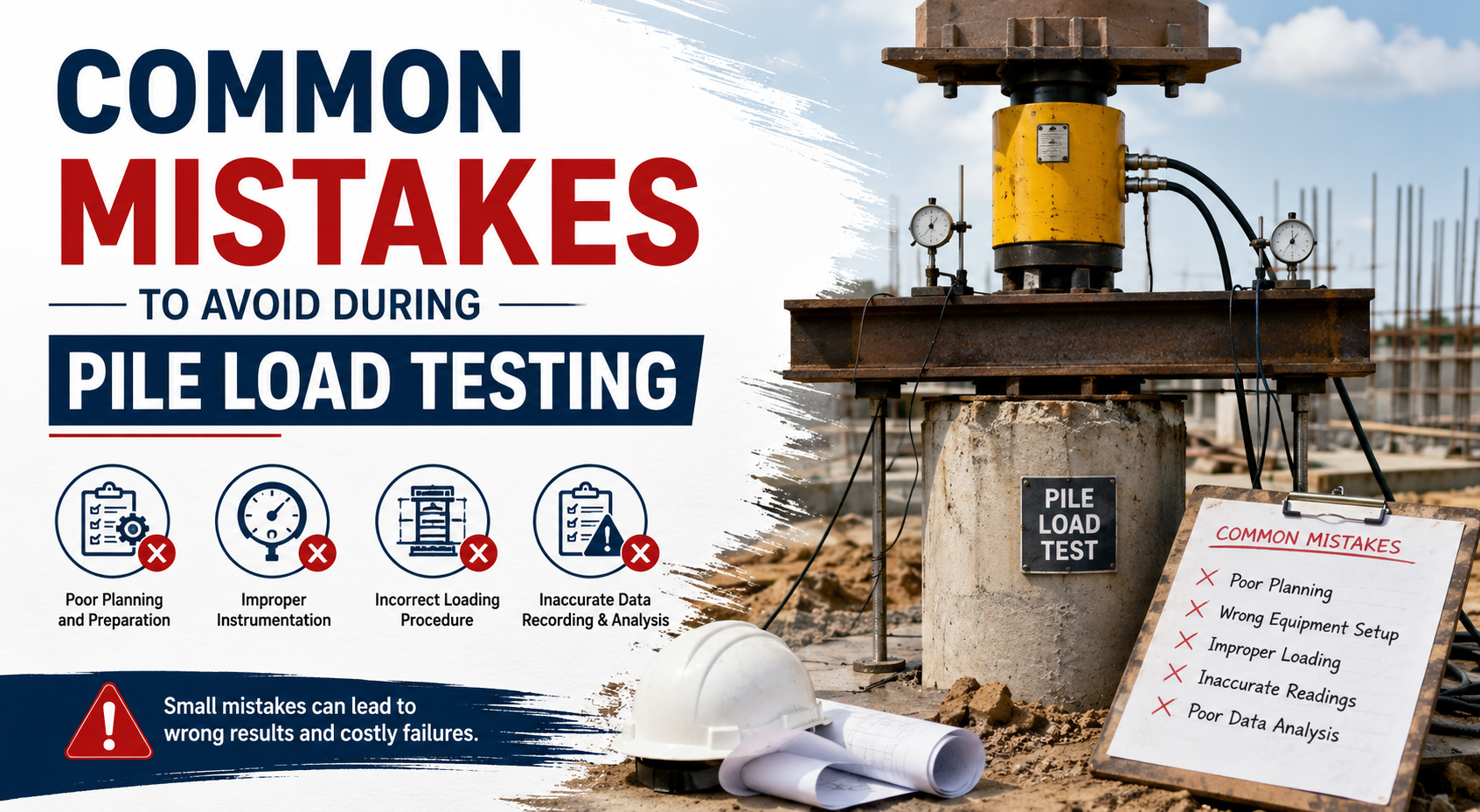
Common Mistakes to Avoid During Pile Load Testing

Need help? Call us Today at+91 7665235528
for inquiries and support. We’re here to assist you.