January 24, 2025
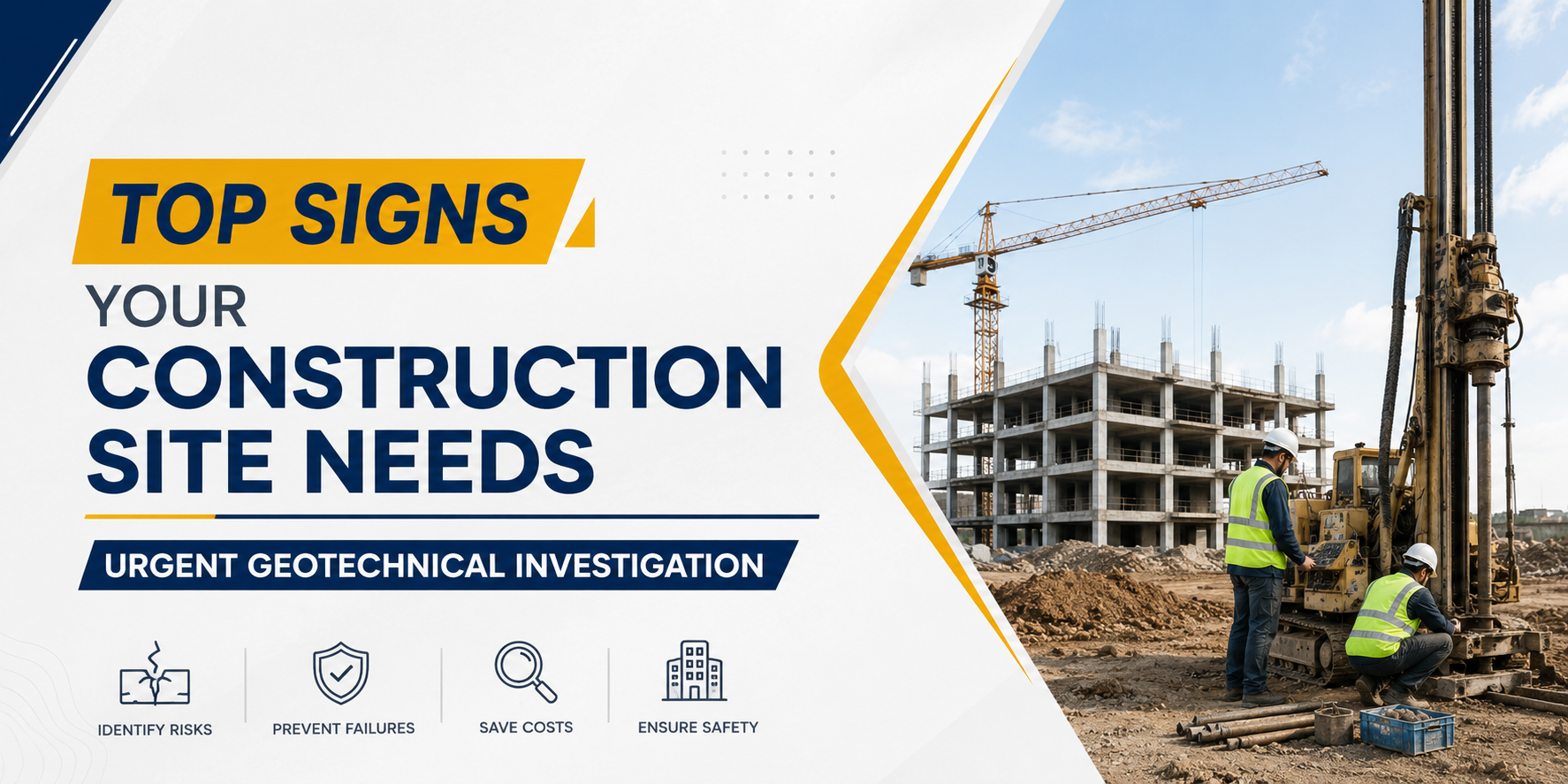
Top Signs Your Construction Site Needs Urgent Geotechnical Investigation
Every successful construction project begins long before a single brick is laid — it begins beneath the ground. Soil investigation before construction is one of the most critical yet often overlooked steps in the building process. Whether you are constructing a residential building, a highway, or a large commercial complex, understanding the ground conditions is non-negotiable.
A proper geotechnical investigation evaluates the physical and engineering properties of soil and rock at a construction site. Without it, engineers are essentially building blind. Skipping or delaying this step can lead to catastrophic structural failures, budget overruns, and even loss of life.
This blog outlines the top warning signs that your construction site urgently needs a professional site investigation for construction — and why acting fast could save your entire project.
What is Geotechnical Investigation?
Before diving into the warning signs, let's briefly understand what geotechnical investigation involves. It is a systematic process of collecting data about the soil, rock, groundwater, and subsurface conditions at a project site. The findings are compiled into a geotechnical investigation report for construction project, which guides engineers in designing safe foundations, retaining walls, slopes, and drainage systems.
It includes methods such as:
-
Borehole drilling and sampling
-
Standard Penetration Tests (SPT)
-
Cone Penetration Tests (CPT)
-
Soil bearing capacity test
-
Laboratory analysis of soil samples
Now, let's look at the critical signs that indicate your site cannot afford to skip this step.
Sign #1: Visible Cracks in Nearby Structures
One of the most alarming foundation failure signs is the presence of cracks in buildings or structures located near your proposed construction site. Diagonal or horizontal cracks in walls, floors, or ceilings often indicate differential settlement — meaning the ground is moving unevenly beneath the structure.
If existing structures nearby are already showing these signs, your site may be sitting on unstable or expansive soil. A geotechnical engineer for construction site must be called immediately to assess the risk before any work begins.
Sign #2: History of Landslides or Soil Movement in the Area
If the land surrounding your site has a history of landslides, slope failures, or ground movement, this is a major red flag. These events are classic signs of soil instability in construction zones and are often caused by:
-
Loose or saturated soils
-
Steep terrain with inadequate drainage
-
Presence of weak or collapsible soil layers
Ignoring this history and proceeding with construction without a proper site investigation for construction is both dangerous and legally irresponsible. A qualified geotechnical team can identify the specific risk factors and recommend corrective measures.
Sign #3: Waterlogging or High Water Table
Does water frequently accumulate on your construction site, even without heavy rainfall? This could indicate a high water table or poor soil drainage — both of which are serious concerns in construction site soil testing.
A high water table can:
-
Reduce the load-bearing capacity of the soil
-
Cause foundation heave or settlement
-
Lead to corrosion of underground structures
Understanding when to do geotechnical investigation becomes crucial in such scenarios — ideally before purchasing the land or starting any design work. A soil bearing capacity test will determine whether the ground can safely support your structure.
Sign #4: Soft or Loose Soil Observed During Excavation
If preliminary excavation work reveals soft, spongy, or loose soil, stop all operations immediately. Soft soils — such as clay, peat, or loose sand — have low shear strength and poor load-bearing capacity, making them one of the leading signs of soil instability in construction.
This kind of soil requires special foundation designs, such as:
-
Pile foundations
-
Raft foundations
-
Ground improvement techniques
None of these solutions can be accurately designed without a detailed geotechnical investigation report that quantifies soil properties at various depths.
Sign #5: The Site Has a History of Industrial or Mining Use
Former industrial sites, quarries, or mined land are among the highest-risk zones for construction. These sites may contain:
-
Hidden voids or cavities underground
-
Contaminated soil layers
-
Filled land with uneven compaction
-
Chemical deposits that weaken soil structure
This is one of the clearest cases why geotechnical investigation is important before construction. Without proper soil investigation before construction, you risk building on an unstable base that could collapse without warning.
Sign #6: Unusual Topography or Sudden Elevation Changes
Does your site have unexpected slopes, depressions, or mounds that don't match the surrounding landscape? These features may indicate buried structures, old riverbeds, or areas of differential settlement.
Abrupt changes in elevation are important signs your building needs soil investigation. A geotechnical team will use sub-surface exploration methods to reveal what lies beneath these anomalies and whether the ground is suitable for construction.
Sign #7: Proximity to Water Bodies
Construction sites located near rivers, lakes, coastal areas, or flood plains are at elevated risk of soil instability. These areas are subject to:
-
Scour erosion (soil being washed away by flowing water)
-
Liquefaction during seismic events
-
Seasonal fluctuations in moisture content
Knowing how to know if construction site needs soil testing is straightforward in such cases — if you're building near water, soil testing is mandatory. Liquefaction alone has caused entire buildings to sink during earthquakes in waterlogged soils.
Sign #8: Heavy Vibrations from Nearby Traffic or Construction
Sites located near highways, railways, or active construction zones experience continuous ground vibrations. These vibrations can loosen compacted soil, reduce its density, and ultimately weaken the foundation zone.
A geotechnical investigation will assess the dynamic properties of the soil and determine whether vibration-resistant foundation designs are needed. This is especially important for tall buildings or sensitive infrastructure like hospitals and laboratories.
Sign #9: Expansive or Black Cotton Soil
Certain types of soil — particularly black cotton soil and expansive clay — swell significantly when wet and shrink when dry. This cyclic swelling and shrinkage exerts enormous pressure on foundations, causing cracking and structural damage over time.
These soils are widely found across parts of India, Africa, and the Middle East. Construction site soil testing can identify expansive soils early so that engineers can recommend suitable foundation types and chemical soil stabilization treatments before construction begins.
Sign #10: Project Involves Large or Heavy Structures
The larger and heavier the structure, the more critical the geotechnical survey becomes. High-rise buildings, bridges, dams, and industrial plants place enormous loads on the ground. Even slightly inadequate soil conditions can result in:
-
Excessive settlement
-
Structural tilting (like the famous Leaning Tower of Pisa)
-
Complete foundation failure
For such projects, a comprehensive geotechnical investigation report for construction project is not just recommended — it is legally required in most countries.
Why You Should Never Delay Geotechnical Investigation
Many project owners skip geotechnical investigation to cut costs or save time. This is a dangerously short-sighted decision. The geotechnical survey cost is typically a fraction of a percent of the total project cost — but the consequences of neglecting it can be catastrophic.
Consider these facts:
-
Foundation failures are one of the leading causes of construction delays and litigation
-
Retrofitting a poor foundation after construction costs 5 to 10 times more than doing it right the first time
-
Many countries now legally mandate geotechnical investigation for certain project types
A qualified geotechnical engineer for construction site can help you avoid all these risks by providing accurate data, reliable recommendations, and a detailed investigation report.
How to Find Urgent Geotechnical Survey Services
If you recognize any of the warning signs discussed above, don't wait. Search for urgent geotechnical survey services near me to find certified geotechnical firms in your region. When choosing a service provider, look for:
-
Licensed and experienced geotechnical engineers
-
Use of modern testing equipment
-
Comprehensive reporting with actionable recommendations
-
Fast turnaround times for urgent projects
Conclusion
Geotechnical investigation is not an optional extra — it is the backbone of safe, efficient, and cost-effective construction. From detecting soil instability and foundation risks to identifying waterlogging and expansive soils, a proper site investigation for construction protects your investment and the lives of future occupants.
If you notice any of the signs discussed in this blog, act immediately. The cost of soil investigation before construction is minimal compared to the devastating consequences of building on unstable ground. Always consult a certified geotechnical engineer for construction site and ensure your project starts on solid — literally — footing.
Popular post

February 08, 2025
Pile Load Testing: Importance, Methods, and Benefits
February 11, 2025
Piling Work Service: The Key to Strong and Stable Foundations
February 18, 2025
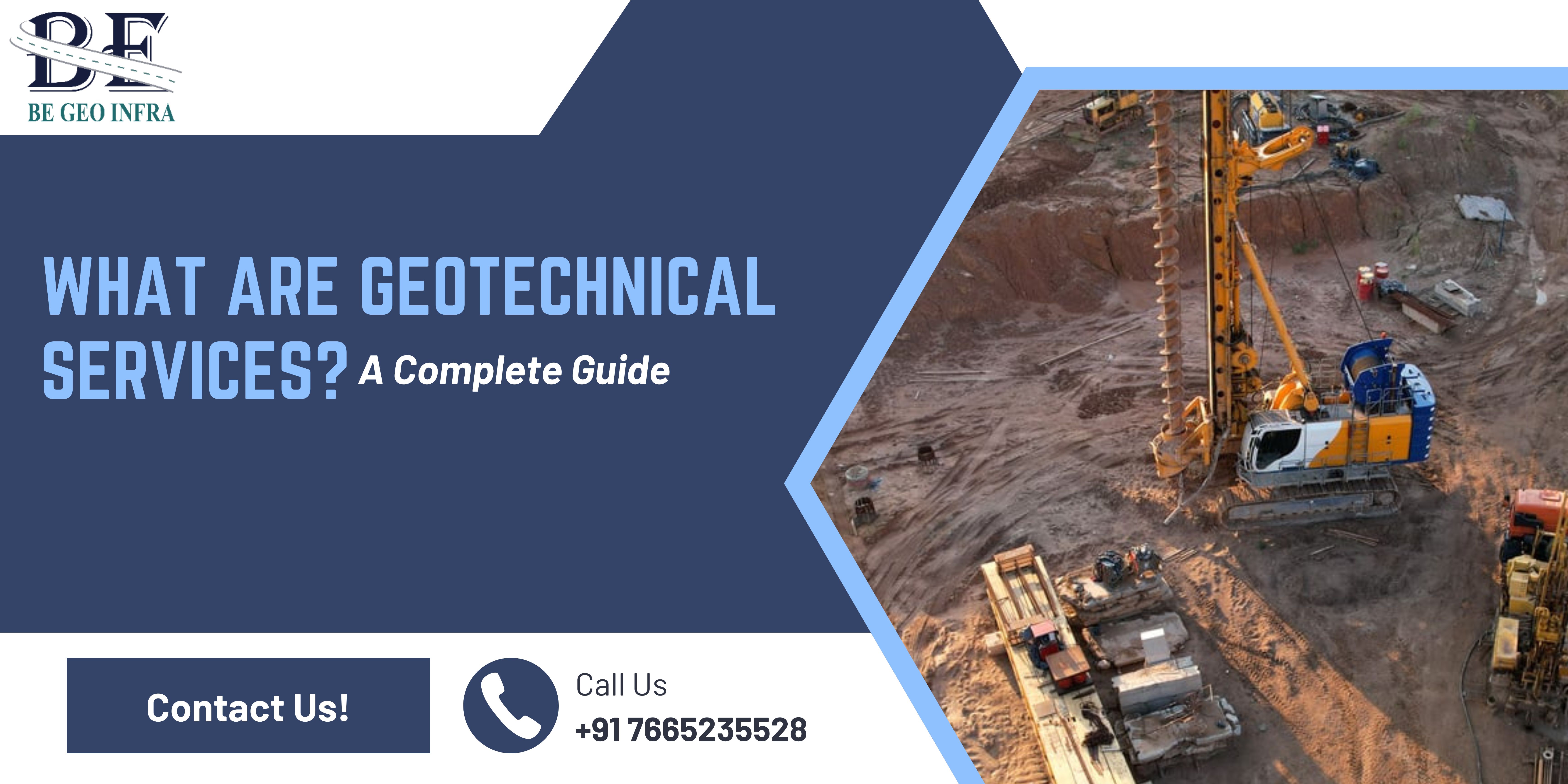
What Are Geotechnical Services? A Complete Guide
February 22, 2025
What is a Road Safety Audit & Why is it Important?





April 16, 2025
Types of Material Testing: A Complete Guide for Beginners
February 07, 2026
Top 10 Geotechnical Problems in Construction and Their Solutions
March 31, 2026
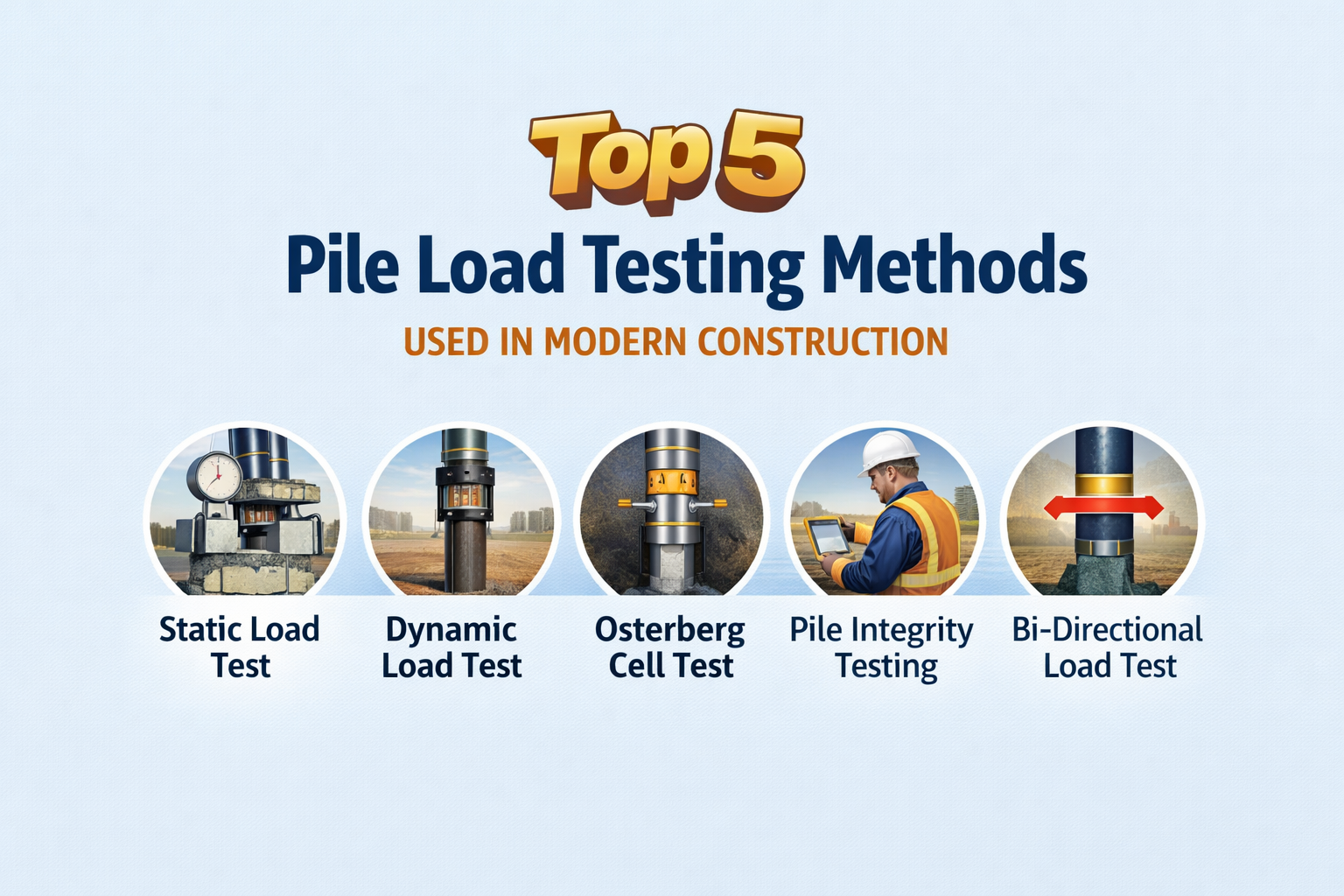
Top 5 Pile Load Testing Methods Used in Modern Construction

June 30, 2026
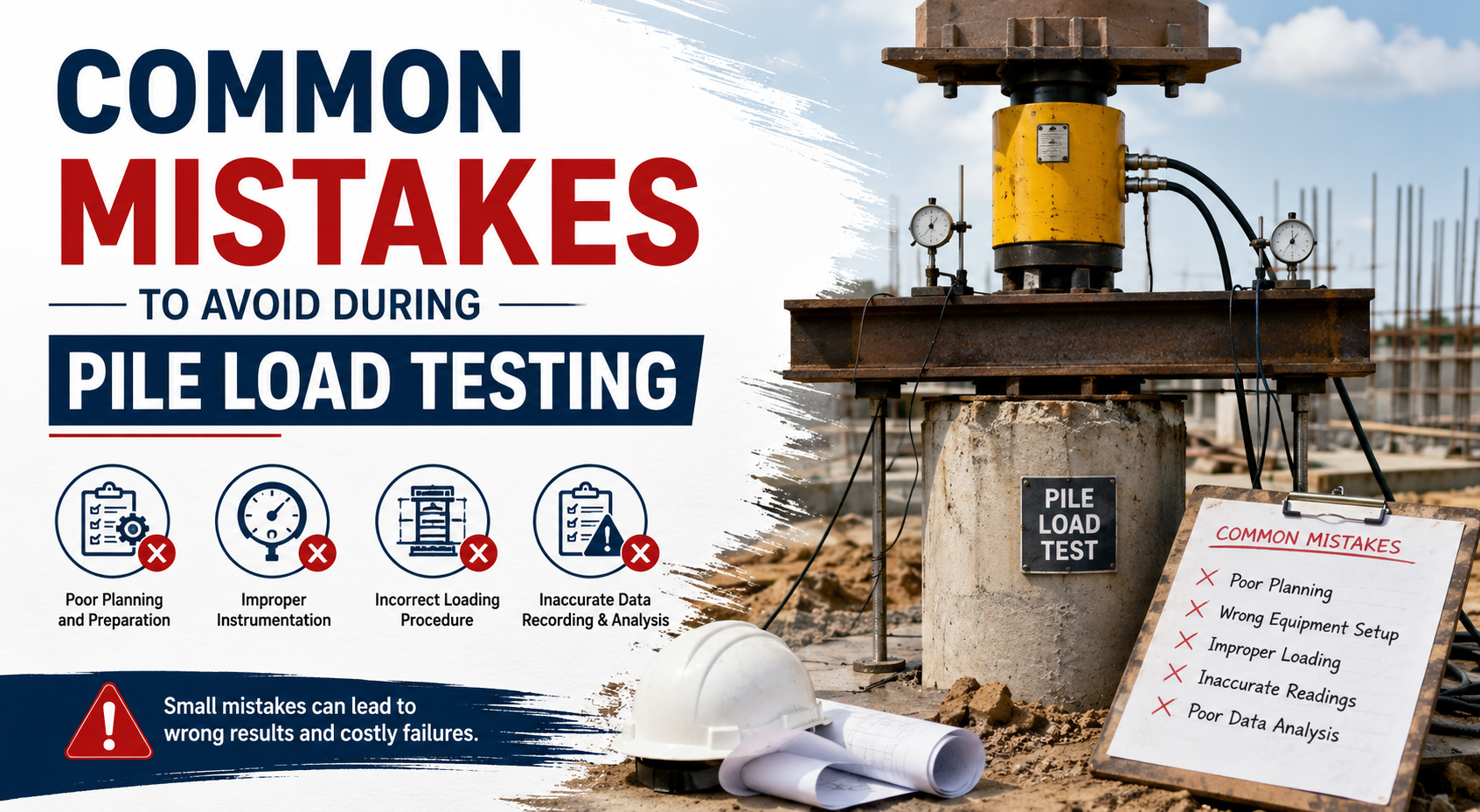
Common Mistakes to Avoid During Pile Load Testing
Need help? Call us Today at+91 7665235528
for inquiries and support. We’re here to assist you.